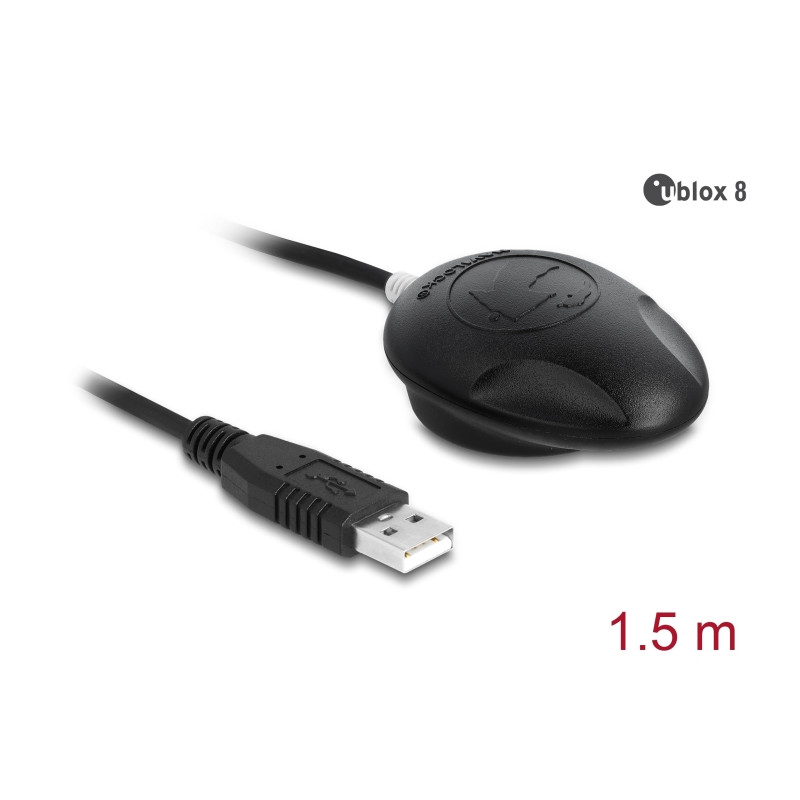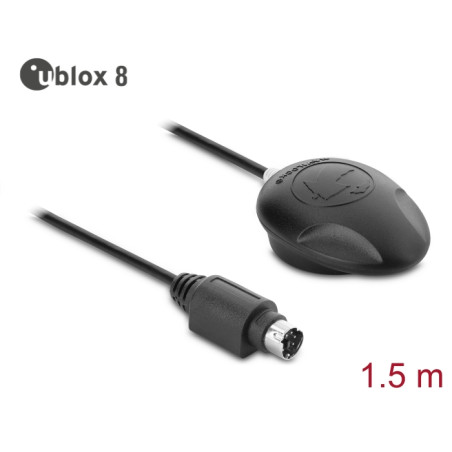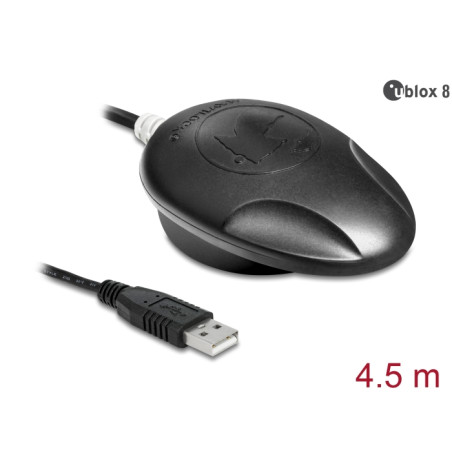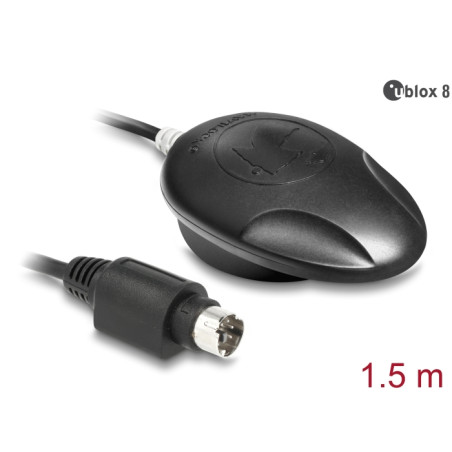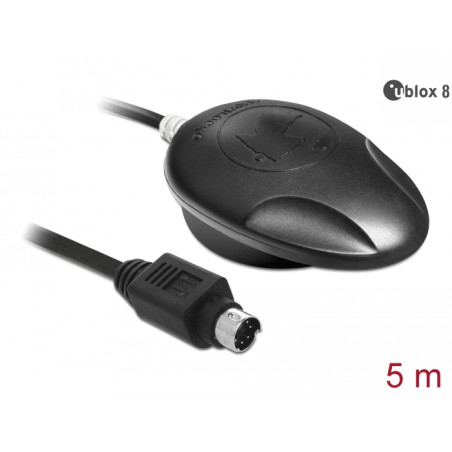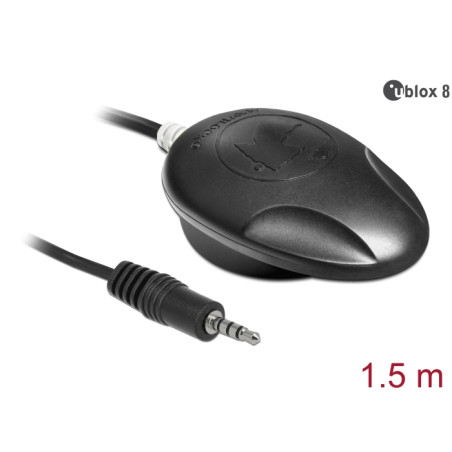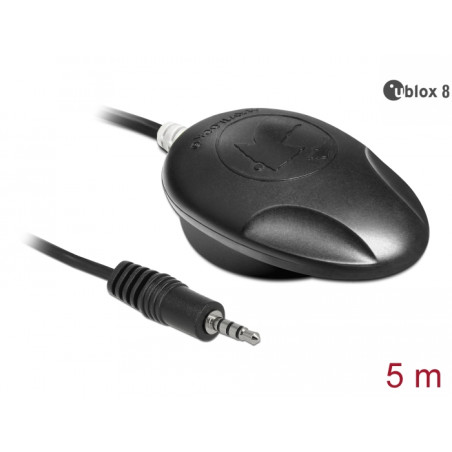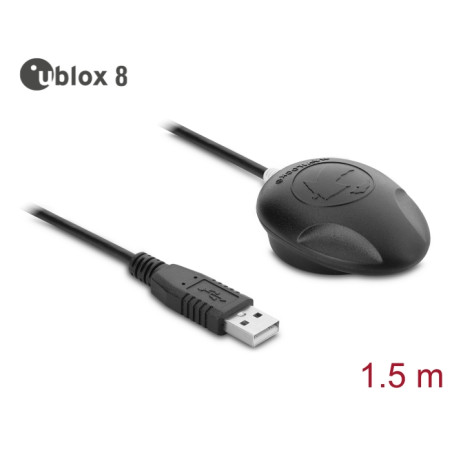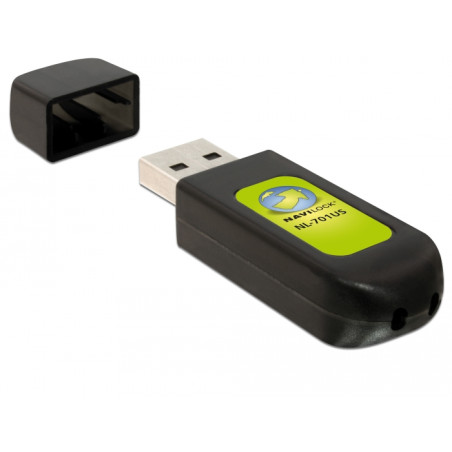
Der USB 2.0 Multi GNSS Empfänger mit dem u-blox 8 Chipsatz besitzt eine eingebaute aktive Antenne. In Verbindung mit einem Notebook und der entsprechenden Navigationssoftware, ist eine Navigation möglich.
Description Der USB 2.0 Multi GNSS Empfänger mit dem u-blox 8 Chipsatz besitzt eine eingebaute aktive Antenne. In Verbindung mit einem Notebook und der entsprechenden Navigationssoftware, ist eine Navigation möglich.
Specification • Anschluss: USB 2.0 Typ A Stecker • u-blox 8 UBX-M8030-KT Chipsatz • Frequenz: GPS: L1, 1575,4200 MHz GLONASS: L1, 1602 (k x 0,5625) MHz BEIDOU COMPASS: B1, 1561,0980 MHz GALILEO E1, 1575,4200 MHz QZSS L1, 1575,4200 MHz • Verarbeitet die Signale von bis zu 72 Satelliten gleichzeitig • Unterstützt AssistNow online/offline, SBAS (WAAS, EGNOS, QZSS und MSAS) • Unterstützt NMEA 0183 Protokolle: GGA, GSA, GSV, RMC, VTG • USB Spezifikation 2.0 • Auto Baud Rate bis zu 115200 bps • Update Rate: einfach GNSS: 18 Hz (z. B. GPS solo) mehrfach GNSS: 10 Hz (z. B. GPS+GLONASS) • Empfindlichkeit max. –167 dBm • IPX6 Schutzklasse • Magnetische und rutschfeste Gehäuseunterseite • LED-Anzeige für GPS-Status • Betriebstemperatur: -20 °C ~ 60 °C • Spannungsversorgung: 5 V DC • Stromaufnahme: max. 45 mA • Kaltstart in ca. 26 Sekunden • Heißstart in ca. 1 Sekunde • Positionsgenauigkeit: 2,5 m CEP (Circular Error Probable) und 2 m CEP mit SBAS • Kabellänge: ca. 1,5 m • Maße (LxBxH): ca. 65 x 45 x 22 mm
• Microsoft Sensor und Location Plattform (Webseite)
System requirements • Linux ab Kernel 2.6, Windows 98SE/ME/2000/XP/Vista/7/8/10/11 Windows Mobile 2003/5/6 • Für mobile Geräte mit micro USB OTG mit optionalen OTG Adaptern: Windows 10